What Nobody Tells You About Starting a Surface Pattern Design Business
I've been involved in design in some form since 2015. That's nine years of courses, experiments, half-finished projects, and a lot of work I wouldn't dare show anyone. And yet, it wasn't until 2024, when I did a particular course, that something actually clicked.
So if you're at the beginning of this and wondering why it feels so hard, or why the advice you're reading doesn't quite match your reality, this post is for you.
It takes years, not months
I don't say this to put you off. I say it because nobody said it to me clearly enough, and I wasted time feeling like I was failing when I was actually just early.
Licensing, the goal most surface pattern designers are working toward, operates on long timelines. You're building relationships with brands, developing a body of work, and waiting for the right brief to land at the right time. Most designers don't land their first licensing deal in year one. Many don't in year two either. If you're treating this like a side hustle that should be paying off within a few months, you'll burn out before you get anywhere near traction.
Knowing this upfront doesn't make it easier, but it does change how you pace yourself.
Passive income through print-on-demand platforms like Spoonflower is similar. I've been on Spoonflower for two and a half months. I've uploaded just over 80 designs.
I've made two sales.
The advice you'll find is that the algorithm doesn't really start compounding until you're past around 150 designs. I'm not there yet. So in a very literal sense, I'm still in the phase where nothing is supposed to happen.
Knowing that has made it easier to keep going. I'm not interpreting the silence as failure. I'm interpreting it as being early. Whether that mindset turns out to be right, I'll let you know, but right now, consistent uploading feels like the only lever I actually have, so that's what I'm doing.
If you're on Spoonflower and wondering why nobody is buying: check where you are relative to that threshold. You might just not be there yet.

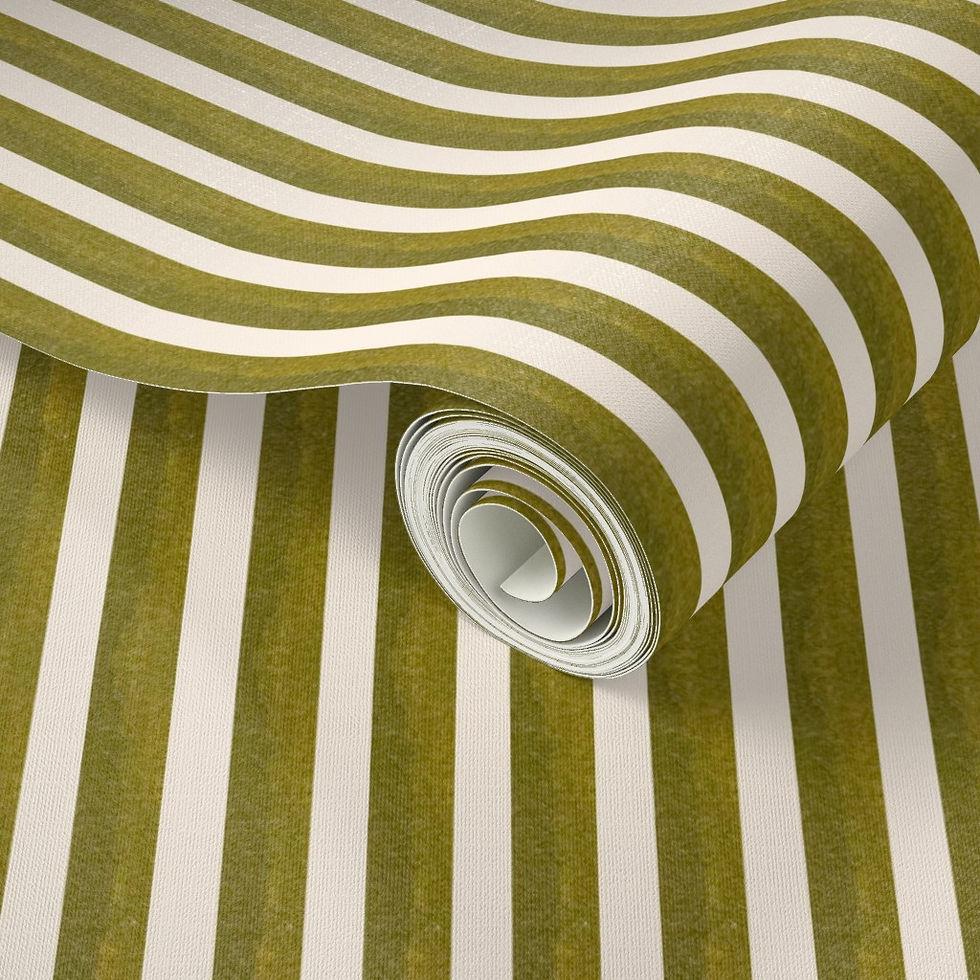
One of my Spoonflower patterns, hand-painted with watercolour
Pretty patterns aren't enough
This one stung a little when I understood it. You can make genuinely beautiful work and still not sell anything, because commercial pattern design is a separate skill from making art you love.
Buyers, whether they're licensing your work or buying fabric on Spoonflower, are thinking about trends, colourways, repeat types, and whether your design fits a specific product or market. They're not just responding to aesthetics. They're making business decisions.
That means you need to think about whether your colour palette works across a product range. About whether your repeat actually tiles correctly for fabric. About who your customer is and what they're making.
Nobody tells you that "I made something beautiful" and "I made something sellable" are two different achievements, and that you need both.
Finding your style takes longer than the internet suggests
There's a version of the surface pattern design journey that gets shared a lot online: someone does a course, develops their style, builds a portfolio, lands clients. It looks clean and sequential.
Mine looked nothing like that.
I started with graphic design in 2015. I did courses. I tried different approaches. I made work I thought was good and then looked back at it six months later and cringed. I experimented with different mediums, some of it genuinely terrible, before I found what I actually enjoy and what feels authentic to me.
The crappy work in between wasn't wasted. It was necessary. But nobody really prepares you for how long the style development phase actually takes, or how uncomfortable it feels when you don't yet have a clear creative identity.
If you're in that phase right now, making inconsistent work, unsure what your "thing" is, you're not behind. You're just doing the part that doesn't get posted about.
A course gives you a map. Not momentum.
The real turning point for me was a Surface Design Course by Cass Deller course. Not because it handed me a business, but because it gave me structure when I had none. It connected the creative side, developing a style, understanding repeats, with the commercial side, and for the first time things started to make sense as a whole rather than a collection of disconnected pieces.
But here's what I want to be honest about: I finished the course and I still don't have licensing deals. I still don't have significant Spoonflower earnings. I'm building, and I'm building with much more clarity and direction than I had before, but the course didn't shortcut the work.
What it did was stop me wasting time going in the wrong direction. It compressed my learning curve significantly. And for someone building this alongside a full-time job and family life, that matters enormously, because I can't afford to spend two years figuring out by trial and error what someone could have just told me.
If you're considering it, you can find it here: Cass Deller's Surface Pattern Design Course I recommend it because it genuinely changed how I work, not because I can promise you it'll make your business an overnight success. Nobody can promise you that.
If you want 10% off the course, SIGN UP HERE.

Cass's stunning work, you can enrol to her course HERE.
Building alongside real life is harder than it looks
Some content about building a creative business is made by people who do it full time. The advice is great, but the pace assumptions are completely different.
I work on Folkflo Studio in lunch breaks, weekday evenings, and weekends. There are weeks where almost nothing gets done. There are seasons where family takes priority and the business goes quiet for a bit, and that has to be okay.
The mental load of building something slowly, when you can see how fast others seem to be moving, is real and underestimated. Progress is invisible for a long time. You're uploading designs nobody is buying yet, writing blog posts nobody is reading yet, posting on Instagram into what feels like a void.
The only thing that makes this sustainable is genuinely enjoying the work itself, having realistic expectations about the timeline, and not measuring yourself against people who are years further along or working completely different hours.
So why keep going?
Because I'm making work I actually love for the first time. Because the clarity I have now, about my style, my direction, my audience, is something I didn't have for most of those nine years. Because the slow build is still a build.
I know I can make this work if I stay consistent and keep putting my heart into it. That's not blind optimism, it's just the only reasonable conclusion when you look at how this industry actually operates. The people who succeed aren't necessarily the most talented. They're the ones who kept going past the point where it looked like nothing was happening
If you're at the beginning and this all sounds daunting: good. Better to know now than to find out six months in and feel blindsided. And if you're mid-journey and recognising yourself in any of this, you're not alone, and you're not failing.
Affiliate disclosure: This post contains affiliate links. If you purchase through my links, I may earn a small commission at no additional cost to you. I only ever recommend courses and resources I've personally used and genuinely believe in, and Cass's courses are ones I recommend wholeheartedly, because they actually changed the way I work.


Comments